A condenser is one of the critical components of cooling systems, responsible for transforming the refrigerant from a gaseous state into a liquid. Condensers are typically used in air conditioners, refrigerators, and industrial cooling systems and are designed to remove heat from the environment.
The Role of the Condenser in the Cooling Cycle
The role of the condenser is to condense the refrigerant, which is compressed and heated by the compressor, into a liquid. During this process, the condensed gas releases its heat to the surrounding air or water.
Structure and Components of the Condenser
- Condenser Coil: Made from aluminum tubes or copper tubes with aluminum fins, allowing for maximum heat transfer.
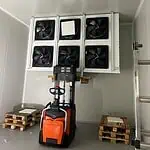
- Fan: In air-cooled systems, it accelerates the heat transfer.
- Compressor: It compresses the refrigerant and sends it to the condenser coil, ensuring the system operates efficiently.
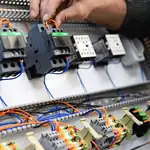
- Control Valves and Sensors: Used to control the temperature and pressure of the cooling system.
Operating Principle of the Condenser
- The compressor pumps the refrigerant in gas form and at high pressure into the condenser coil.
- The condenser coil allows the heat to be transferred to the surrounding air or water.
- The gaseous refrigerant condenses and becomes liquid.
- The cooled liquid refrigerant is sent to the expansion valve, where the pressure is reduced to allow evaporation.
- The refrigerant enters the evaporator to absorb heat from the environment and returns to a gaseous state to continue the cycle.
Types of Condensers
- Water-Cooled Condensers: Preferred in large-capacity systems, these condensers are highly efficient in heat transfer.
- Air-Cooled Condensers: The refrigerant is cooled by ambient air, commonly used in household air conditioners and refrigerators.
- Evaporative Condensers: These condensers use both air movement and water spray to condense the refrigerant, but are becoming less preferred due to rapid contamination and frequent maintenance.