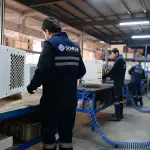
Cold storage facilities are essential in sectors such as food, pharmaceuticals, agriculture, and chemicals to preserve product quality. However, these facilities consume a high amount of energy due to refrigeration systems that operate 24/7. With rising energy costs and growing emphasis on sustainability goals, the need for more efficient solutions has become imperative. This is where smart thermostats come into play, offering a more controlled and optimized approach to energy management in cold storage environments.
What Are Smart Thermostats and How Do They Work?
Smart thermostats are devices that continuously monitor ambient temperature via sensors and automatically manage heating and cooling systems based on external conditions and usage patterns. In environments like cold storage rooms that require constant temperature, these devices maintain optimal conditions while minimizing energy consumption by preventing unnecessary system operation.
Advanced systems can also monitor factors such as humidity levels, frequency of door openings, and outside temperatures to make even smarter decisions. This results in significantly higher energy efficiency compared to traditional systems.
Factors Affecting Energy Consumption
- Unnecessarily low temperature settings inside the storage area
- Active cooling in unused areas
- Doors being left open for extended periods or being frequently opened and closed
- Manual systems that can’t respond to daily temperature fluctuations
Such situations not only increase energy consumption but may also negatively affect product shelf life. Smart thermostat systems take all these factors into account to optimize cooling performance.
Advantages of Smart Thermostats
- Energy savings: Potential savings of 15% to 30%.
- Remote access: Real-time monitoring and control via mobile apps.
- Automatic scheduling: Switching between day and night temperature settings.
- Fault notifications and system monitoring: Issues can be detected early.
- Reduced carbon footprint: Important for a sustainable business model.
Application Areas
Smart thermostat systems can be used in a wide range of areas, from small commercial refrigerators to large industrial storage facilities. They are especially critical in the following sectors:
- Food producers and supply chains
- Pharmaceutical and biotechnology companies
- Cold chain logistics companies
- Hospitals, laboratories, and frozen food businesses
Recommendations for Cold Storage Owners
- Analyze the energy consumption of your current system.
- Check whether your thermostat system supports remote access and reporting.
- Consider investing in AI-supported systems.
- Don’t neglect staff training. Improper use can reduce efficiency even in the most advanced systems.
Conclusion
The use of smart thermostats in cold storage facilities stands out as a solution that reduces costs while being environmentally friendly. These systems enable lower energy bills, longer shelf life for products, and a more sustainable business structure. Businesses that use technology effectively win not only today but also in the future.