
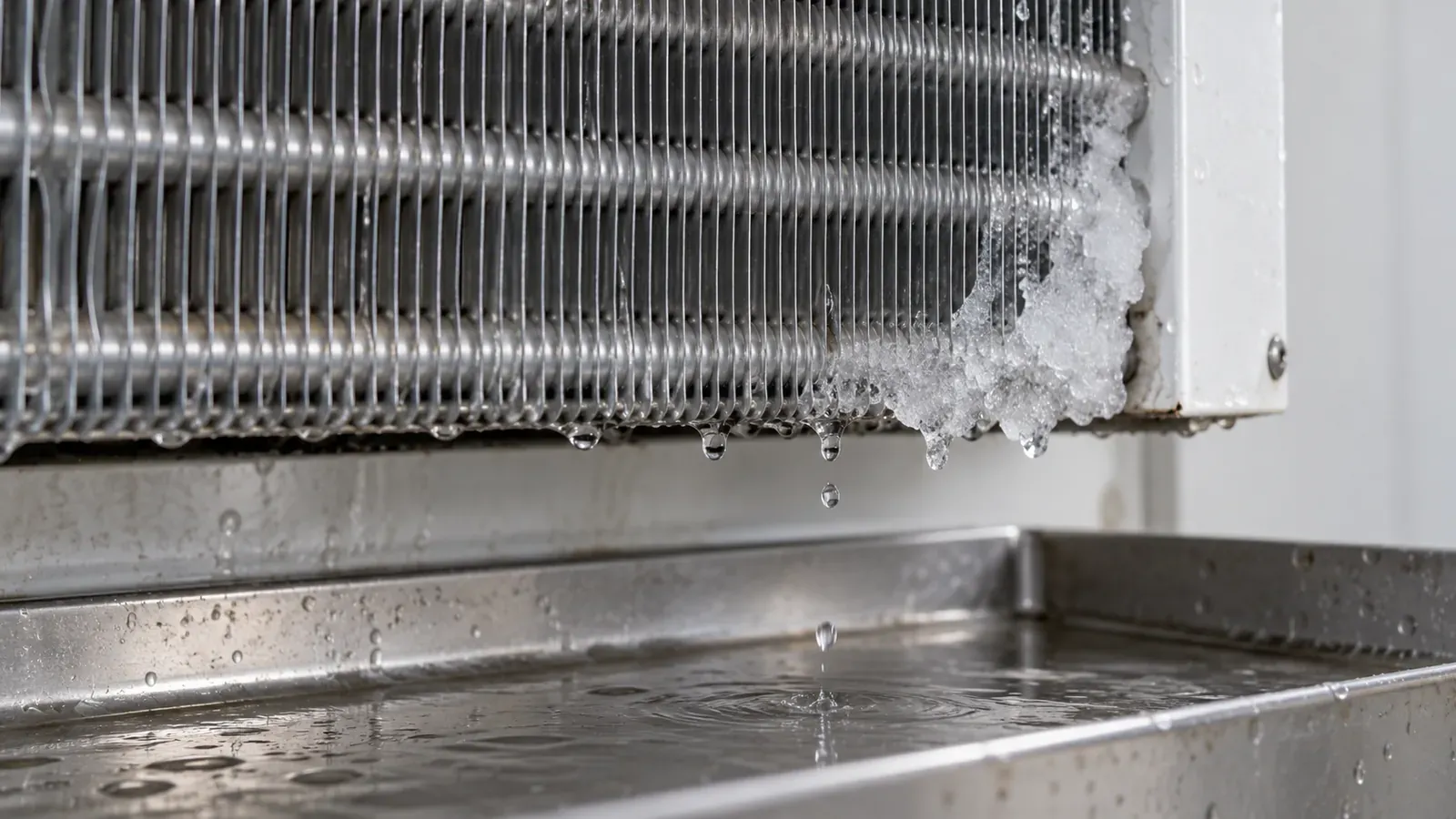
Defrost is the controlled melting of the ice and frost that form over time on the surface of the evaporator in refrigeration systems. Especially in cold rooms operating at low temperatures, frozen product warehouses and industrial refrigeration facilities, defrosting is of great importance for keeping the system running efficiently.
Why Is Defrost Necessary?
In refrigeration systems, the evaporator performs cooling by drawing heat from the room. As humid air passes over the evaporator surface, if the surface temperature is below 0°C, the moisture in the air can freeze and form a layer of ice and frost.
Over time, the ice layer that builds up on the evaporator blocks the airflow and impairs heat transfer.
This can cause the following problems:
- Reduced evaporator airflow
- Lower refrigeration capacity
- Room temperature failing to reach the desired level
- Longer compressor running times
- Higher electricity consumption
- Excessive icing on the evaporator surface and complete blockage of the airflow
Defrosting melts the ice that has built up on the evaporator and helps the system return to normal operating conditions.
How Does Defrost Work?
Defrosting is carried out at set intervals or when needed, depending on the system's operating conditions and the equipment used.
During defrost, the ice on the evaporator is melted in a controlled way. When the process is complete, the meltwater is drained and the evaporator returns to cooling mode.
In modern refrigeration systems, defrosting can be managed through time control, evaporator temperature sensors and automation systems.
What Are the Types of Defrost?
1. Electric Defrost
Electric defrost systems use electric heating elements placed on the evaporator or in suitable positions.
The heating elements generate heat in a controlled manner and melt the ice on the evaporator.
Electric defrost is one of the most widely used methods, especially in low-temperature cold rooms and frozen product warehouses.
2. Hot Gas Defrost
In hot gas defrost systems, the high-temperature, high-pressure refrigerant gas leaving the compressor is directed to the evaporator through a suitable valve arrangement.
The heat released as the hot gas condenses inside the evaporator melts the ice.
The hot gas defrost method may be preferred especially in large-capacity industrial refrigeration systems.
3. Natural Defrost
In the natural defrost method, cooling at the evaporator is stopped and the ice is allowed to melt under the effect of the room temperature.
This method can generally be used in cold rooms where the room temperature is above 0°C and under suitable operating conditions.
How Are Defrost Duration and Frequency Determined?
Defrost duration and frequency are not the same for every refrigeration system.
These values are determined by the following factors:
- Operating temperature of the cold room
- Humidity of the room
- How often the doors are opened
- Evaporator airflow
- Characteristics of the stored product
- Daily quantity of product entering the room
- Amount of ice building up on the evaporator
Defrosting more often than necessary can increase energy consumption. Insufficient defrosting, on the other hand, can lead to excessive icing on the evaporator and reduced refrigeration capacity.
Correct defrost settings are therefore important for the efficient and reliable operation of the system.
What Is the Fan Delay After Defrost?
Once defrosting is complete, the evaporator fans should not be started immediately.
Because the evaporator surface warms up during defrost, starting the fans too early can carry water droplets from the evaporator into the cold room and cause icing again.
For this reason, a fan delay is applied after defrost. The fans restart when the evaporator reaches the set temperature.
Conclusion
Defrost is an important process applied to maintain the performance of refrigeration systems and keep icing on the evaporator under control.
The right defrost method and appropriate automation settings help maintain refrigeration capacity, control energy consumption and make the system run more reliably.
At Sonkar Soğutma, we place great importance on the correct selection of equipment and sound engineering practice in industrial refrigeration systems.