
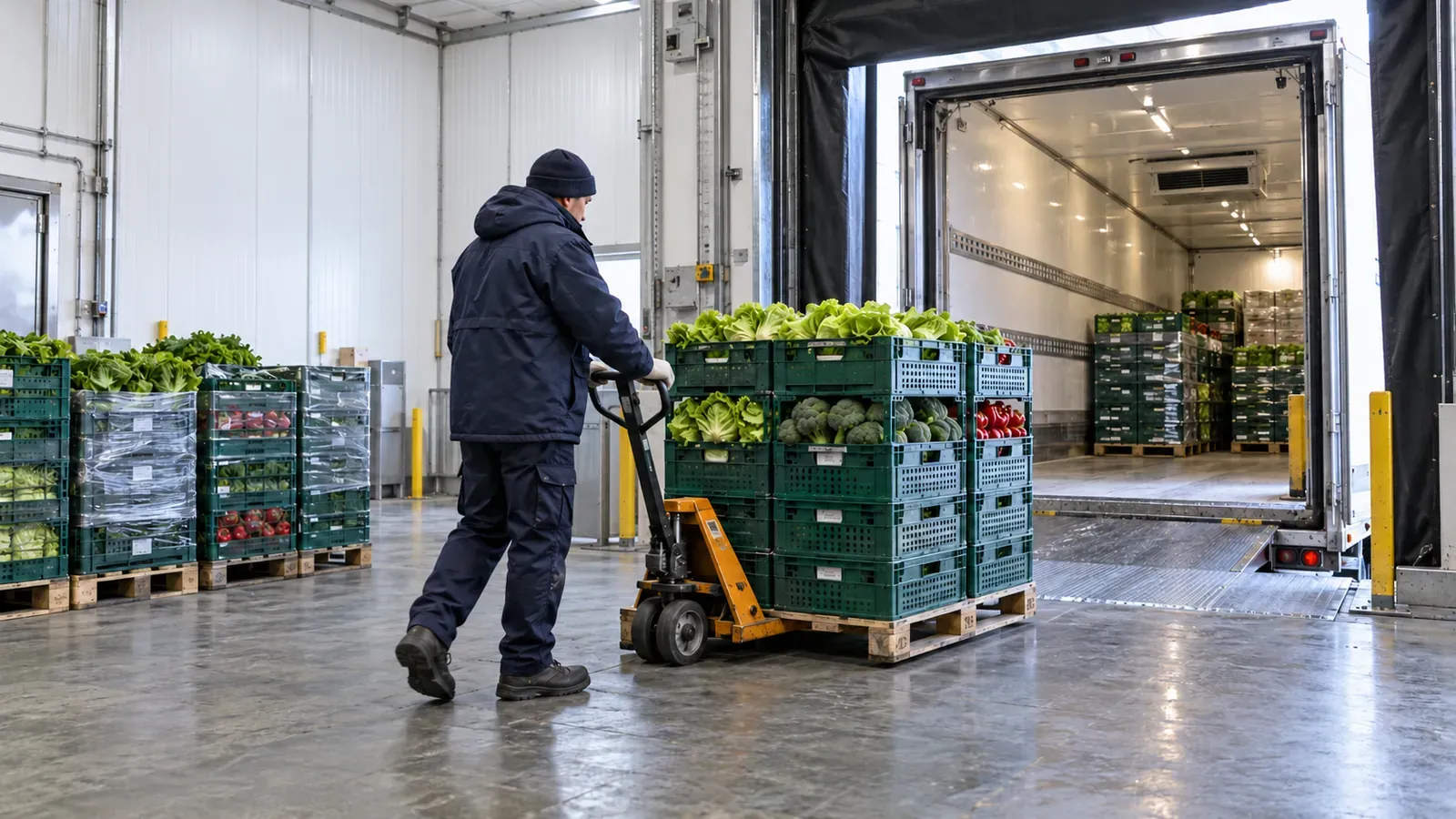
The cold chain is the complete system of storage, transport and distribution that keeps temperature-sensitive products within the temperature conditions they require, without interruption, at every stage from production until they reach the consumer.
It is applied to protect the quality, safety and shelf life of products that are directly affected by temperature changes, in particular food, meat, milk and dairy products, fish, frozen foods, and pharmaceutical and healthcare products.
The fundamental purpose of the cold chain is to keep products under suitable temperature conditions from the moment they are produced until they reach the end user.
Using cold storage warehouses alone is not enough. Production areas, pre-cooling systems, cold stores, refrigerated vehicles, distribution centres and points of sale must all work in harmony with one another.
Why Is the Cold Chain Important?
In temperature-sensitive products, unsuitable temperature conditions can lead to microbial growth, deterioration of product quality, loss of nutritional value and a shorter shelf life.
Managing the cold chain correctly provides the following advantages:
- Preserving product quality: It helps maintain the physical, chemical and sensory properties of foods.
- Food safety: Maintaining suitable temperature conditions keeps the risk of microbial growth under control.
- Longer shelf life: It helps products be kept for longer under suitable conditions.
- Fewer economic losses: It helps reduce the amount of product that spoils or becomes unusable.
- Supply continuity: It ensures that products are delivered from production to the consumer in a controlled manner.
What Are the Stages of the Cold Chain?
The cold chain consists of many complementary stages. A temperature control problem at any stage of the chain can adversely affect the quality and safety of the product.
1. Production and Initial Cooling
The first stage of the cold chain begins at the point of production.
Especially for products such as meat, milk, fish, vegetables and fruit, providing suitable temperature conditions right after production or harvest is of great importance.
Depending on the product's characteristics, pre-cooling, rapid chilling or freezing may be applied.
2. Storage in Cold Stores
Storing products under suitable temperature and humidity conditions is one of the most important stages of the cold chain.
The main equipment used in cold stores is as follows:
- Sandwich panel systems
- Cold room doors
- Evaporators
- Condensers
- Compressor units
- Refrigeration automation systems
- Temperature and humidity control equipment
The storage temperature must be determined according to the type of product and its storage requirements.
3. Cold Chain Transport
Temperature control must continue while stored products are transported to different locations.
Refrigerated vehicles, refrigerated containers and special transport equipment are used for this purpose.
Key points to consider during transport:
- Continuously monitoring the temperature inside the vehicle
- Bringing the vehicle body to the appropriate temperature before loading
- Placing products so that they do not obstruct air circulation
- Not leaving doors open unnecessarily
- Keeping track of temperature records
4. Distribution and Points of Sale
One of the final stages of the cold chain is delivering products to supermarkets, restaurants, businesses and points of sale.
At this stage, products must be kept in suitable refrigerated cabinets or storage rooms.
The required temperature conditions must be maintained until the products reach the consumer.
Refrigeration Systems Used in the Cold Chain
To keep the cold chain running without interruption, refrigeration systems of different capacities and technologies are used.
Industrial Refrigeration Systems
High-capacity industrial refrigeration systems are used in large-volume cold stores and production facilities.
Screw and reciprocating compressors, central refrigeration units and advanced automation solutions may be preferred in these systems.
Ammonia Refrigeration Systems
Ammonia (R717) is a natural refrigerant used especially in large-scale industrial refrigeration plants.
With appropriate engineering design, it can be used in high-capacity cold stores, food processing facilities and frozen product warehouses.
Glycol Refrigeration Systems
Glycol systems are indirect refrigeration systems in which a chilled fluid is pumped to different points of the facility.
They can be used especially in large facilities for central cooling and for controlling the temperature of different processes.
Freon Refrigeration Systems
Systems operating with synthetic refrigerants, commonly referred to as Freon systems, are used in commercial refrigeration, cold rooms and various industrial applications.
The appropriate refrigerant must be selected according to the system design and application requirements.
How Is Temperature Control Ensured in the Cold Chain?
For the cold chain to be maintained reliably, temperature values must be monitored continuously or at defined control intervals.
Thanks to automation systems in modern refrigeration facilities:
- Room temperatures can be monitored in real time.
- An alarm can be triggered when temperatures move outside the set values.
- Compressor running times can be controlled.
- Defrost cycles can be managed automatically.
- Temperature history can be recorded.
- Remote monitoring and control systems can be used.
These systems help detect possible temperature deviations early and reduce product losses.
What Is a Cold Chain Break?
A cold chain break occurs when, at any stage, products move outside the temperature range in which they must be kept, in an uncontrolled way.
This can result from the following causes:
- Faults in the refrigeration system
- Power outages
- Insufficient refrigeration capacity
- Loss of temperature control during transport
- Cold room doors left open for long periods
- Incorrect storage and loading practices
- Inadequate maintenance and inspection
A break in the cold chain can lead to serious quality and safety problems, especially in food and healthcare products.
For this reason, correct engineering design, regular maintenance, automation and temperature monitoring are of great importance in cold chain systems.
What Temperature Should the Cold Chain Be Kept At?
There is no single standard temperature for the cold chain. The storage temperature is determined by the type and characteristics of the product and the relevant regulatory requirements.
General examples:
- Fresh meat products: Generally around 0°C to +4°C, depending on the product type
- Milk and dairy products: Generally +2°C to +6°C, depending on the product
- Frozen foods: Generally -18°C or lower
- Fresh fish: Conditions close to the temperature of melting ice, depending on the product and application
- Medicines and vaccines: The storage temperature specified by the manufacturer; +2°C to +8°C for many products
These temperatures are for general information only. For each product, the manufacturer's instructions, food safety requirements and the relevant regulations must be taken as the basis.
Uninterrupted Cold Chain Solutions with Sonkar Soğutma
Maintaining the cold chain reliably is possible by designing the right refrigeration systems and carrying out professional engineering practices.
At Sonkar Soğutma, with our engineering approach in industrial refrigeration, our project experience and our high-capacity refrigeration solutions, we aim to develop systems that meet the needs of businesses.
In every project, from cold stores to large-scale industrial refrigeration facilities, we prioritise correct capacity selection, energy efficiency, system reliability and long service life.